Smart display stands make your products more competitive
time:2026-05-14
2026 will undoubtedly mark the year of the full-scale boom in AI consumer electronics.
AI glasses, AI rings, AI Bluetooth earbuds, portable AI devices... Smart wearable products that once existed only as concepts are now making their way into the mainstream consumer market.
Industry data clearly demonstrates the benefits of this emerging trend:
✅ The global AI wearable market has surpassed 1.68 trillion, and is projected to reach 3.2 trillion by 2030, with a compound annual growth rate exceeding 13% over the next five years;
✅ The AI ring market has experienced explosive growth, with an annual growth rate as high as 78%, making it the latest hit category in digital retail stores;
✅ Demand for AI glasses has surged in physical stores; for products that rely on in-person try-ons and feature demonstrations, conversion rates in physical stores far exceed those of ordinary digital products;
✅ Over 73% of consumers have made it clear: they will never purchase AI wearable products without trying them in person.
With the trend booming, the market expanding, and user demand surging, many consumer electronics brands and brick-and-mortar stores find themselves in the same awkward predicament:
While product specifications continue to improve, closing sales in stores is becoming increasingly difficult.
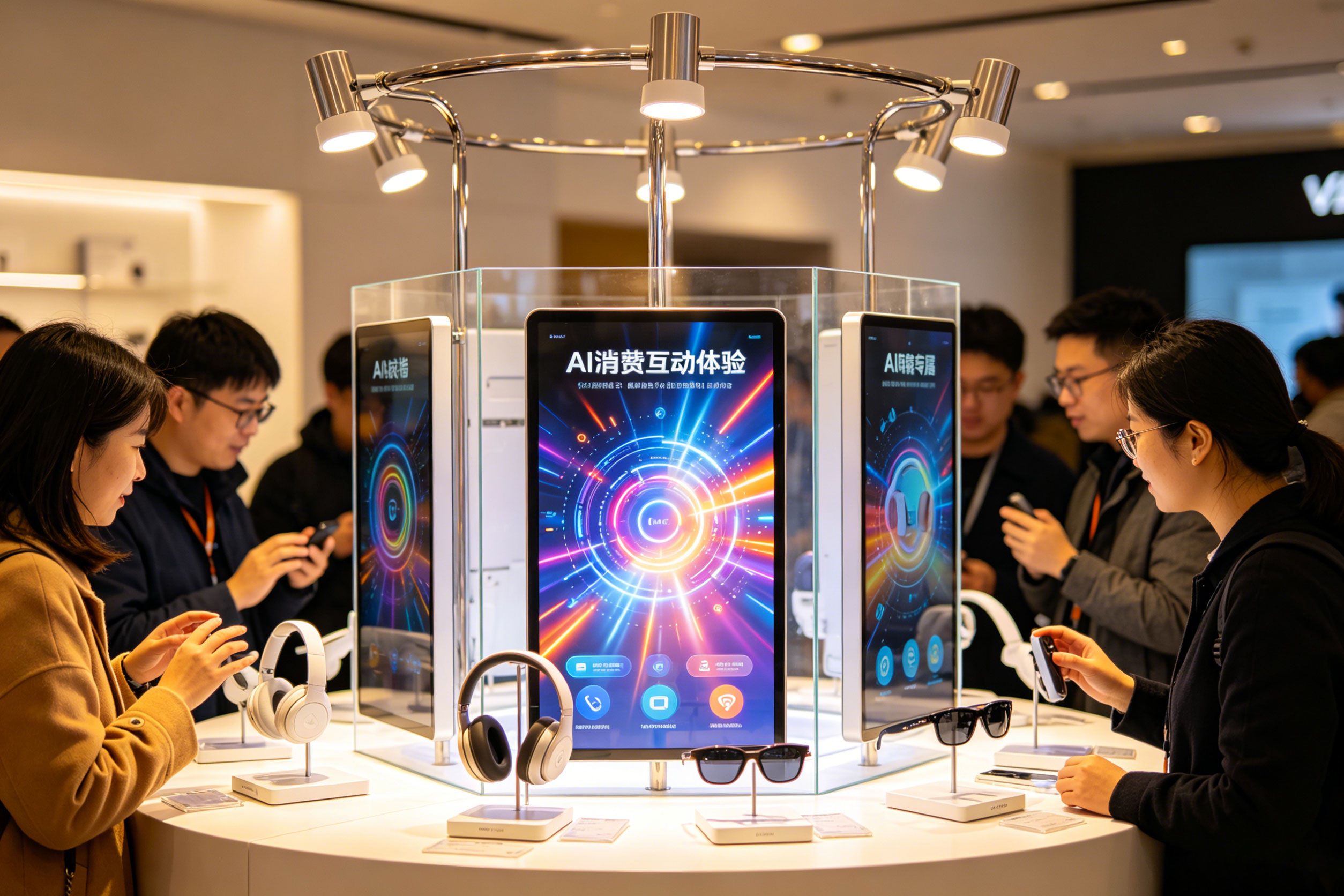
01 Why Are Your AI Products Attractive but Hard to Sell?
Unlike traditional mobile phones and digital accessories, the core value of AI wearable products is invisible, intangible, and difficult to articulate.
The intelligent noise cancellation and real-time voice interaction of AI earbuds;
The AR augmented reality, real-time translation, and smart navigation of AI glasses;
The heart rate and blood oxygen monitoring, sleep data tracking, and seamless smart interaction of AI rings;
These core selling points simply cannot be conveyed through a single poster, a short video, or a list of specifications.
Traditional static display shelves can only showcase a product’s “exterior,” but they cannot demonstrate its “AI-powered core.”
Consumers cannot understand the features, perceive the differences, or experience the value—ultimately, they will simply walk into the store to take a look, then turn around and buy online, resulting in direct customer loss.
Data shows that when relying solely on online images and specifications, user intent to purchase AI wearable products is less than 28%; however, stores offering immersive interactive experiences can directly boost conversion rates by 35%–50%.
The second half of the AI hardware competition is no longer about the product itself, but rather about offline experiences and in-store displays.

02 With years of experience in the smart display rack industry, we have successfully addressed the pain points of AI-powered devices.
As a manufacturer specializing in retail display solutions for 3C digital and AI smart products, we provide end-to-end services covering the research, design, customization, and implementation of smart display stands. We have a deep understanding of the product characteristics of AI consumer electronics and the challenges faced by retail stores.
Moving beyond the limitations of traditional static shelving, we use technology to enhance displays, leverage interaction to drive sales, and utilize data to fuel growth—ensuring that consumers can intuitively experience the intelligent value of every AI product.
For the full range of AI products—including AI glasses, AI headphones, and AI rings—we have developed dedicated AI interactive display solutions. With four core advantages, these solutions precisely address the industry’s evolving needs:
Prev:SHOP! Grand Prix! Responsy Display, Making a Name for Itself
Next:Upgraded 2026 Industry Material Selection Standards: Complying with New Retail Regulations and Globa


